Jane H. Lee
Contact: jane.h.lee at <my school> .edu
About
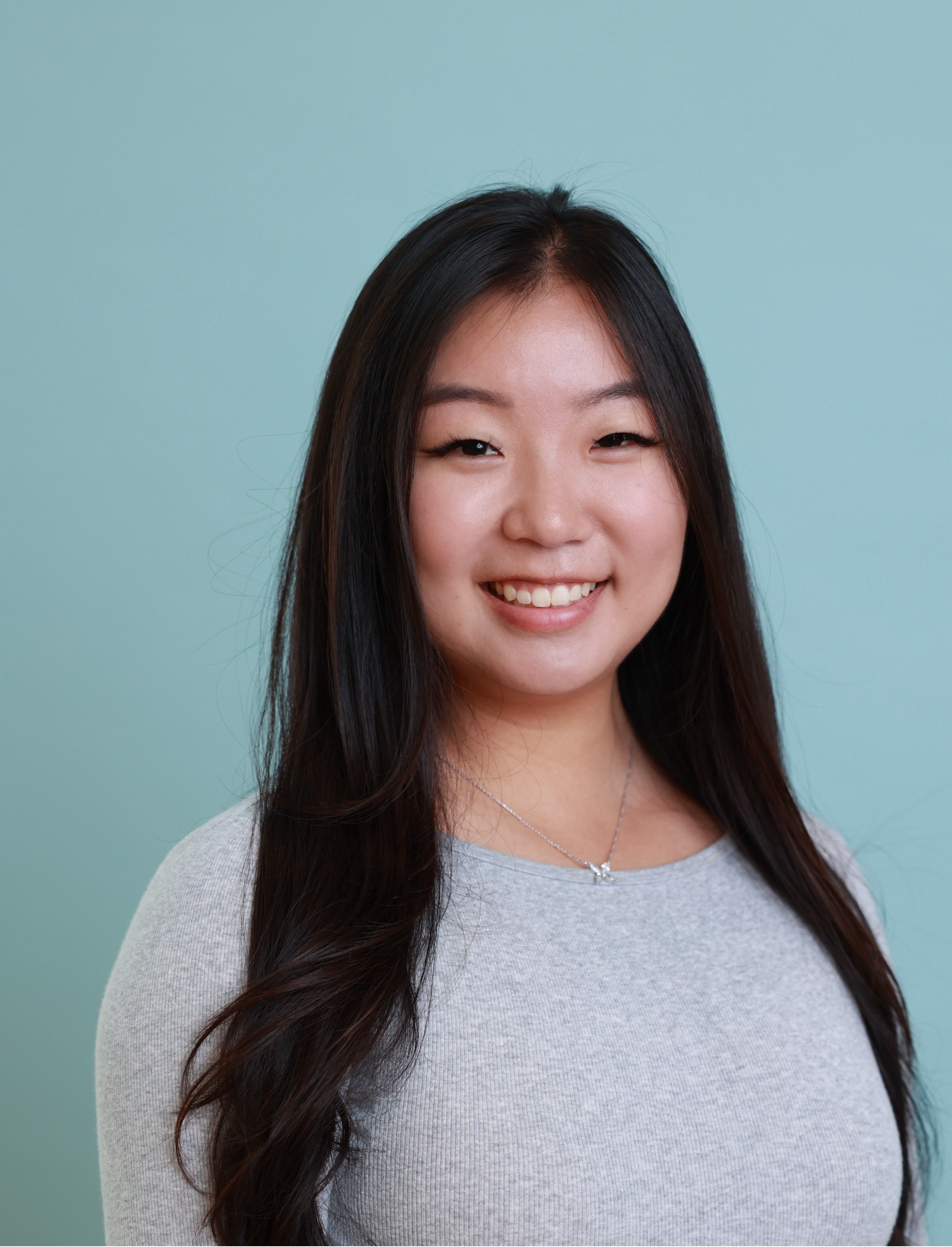
Hi! I am a Computer Science Ph.D. student at Yale University, fortunate to work with Manolis Zampetakis and Andre Wibisono. During my Ph.D., I have also benefited from having great mentors during several professional internships. I will be interning during Summer and Fall 2026 at Google as a Student Researcher hosted by Jinoo Baek and Jieru Mei. In Summer and Fall 2025, I interned at Meta as a Research Scientist Intern hosted by Mandy Chen. In Summer 2024, I interned at Morgan Stanley as a Machine Learning Research Associate hosted by Andrew Bennett.
Prior to starting my Ph.D. studies, I worked at Twitter in the Ads Targeting and Modeling team as a machine learning engineer. Before that, I completed my master’s and bachelor’s degrees together at the University of Pennsylvania, where I was advised by Shivani Agarwal for my master’s thesis.
I am grateful to have received a GFSD (formerly NPSC) fellowship in 2022, sponsored by the U.S. National Security Agency (NSA). I received the Greenberg Fellowship from Yale in 2024. I received my department’s teaching award for 2022-2023. Recently, I was selected as a 2026-2027 Rising Star in EECS.
Fellowships and Programs
AI Societal Impact Lab
Studying the socio-political implications of emerging AI technology. As a cohort of 16, this fellowship brings together perspectives from different disciplines to look at the societal impact of AI.
Inaugural Autumn 2026 Fellow · Fellowship Page
Mass Atrocities in the Digital Era (MADE)
Studying the role that emerging technology plays in mass atrocities, with a focus on accountability, corporate responsibility, and genocide studies scholarship.
MADE Fellow (2025-2026) · Fellowship Page
Research
I am interested in machine learning theory and optimization, particularly when theoretical insights can improve the design and practical use of machine learning algorithms. My research has focused largely on dealing with noise, missing information, uncertainties, and other limitations in available data. I’ve recently developed an interest in understanding the societal implications of AI and the technology we build.
Publications
(* = alphabetical or equal)
WORKSHOPS, PREPRINTS, AND WORKING PAPERS
“Streaming Attention Approximation with Page-Aligned Memory Management”
J. H. Lee, N. Jali, I. Han, A. Zandieh, J. Mei, J. Baek
Preliminary version in MLForSys and PALM Workshops @ NeurIPS 2026
“AnchorRank: Training-Free Anchor based Plan-and-Execute Decoding in DLMs”
N. Jali, J. H. Lee, A. Nayak, C. Lin, J. Baek
Preliminary version in DiffuLM and BeNTo Workshops @ NeurIPS 2026
CONFERENCES
“Long-Term Risks of Risk-Based Allocation”
J. N. Kaur*, J. H. Lee*, M. Zampetakis*
NeurIPS 2026
“Learning-Enabled Estimation: Tight Characterizations under Sample Selection Biases”
V. Kher*, J. H. Lee*, A. Mehrotra*, M. Zampetakis*
EC 2026 · paper
“Smoothed Analysis of Learning from Positive Samples”
J. H. Lee*, A. Mehrotra*, M. Zampetakis*
STOC 2026 · paper
“Massive Memorization with Hundreds of Trillions of Parameters for Sequential Transducer Generative Recommenders”
Z. Chen*, C. Zhao*, K. C. Mo, Y. Jiang, J. H. Lee, S. Chen, K. C. Mahajan, N. Jiang, K. Ren, J. Li, W. Yang
ICLR 2026 · paper · short talk
“Risk-Averse Constrained Reinforcement Learning with Optimized Certainty Equivalents”
J. H. Lee, B. Saglam, S. Pougkakiotis, A. Karbasi, D. Kalogerias
Preliminary version in Duality Principles for Modern Machine Learning Workshop @ ICML 2023
“Efficient Statistics With Unknown Truncation: Polynomial Time Algorithms Beyond Gaussians”
J. H. Lee*, A. Mehrotra*, M. Zampetakis*
FOCS 2024 · paper · 20 min talk · 1 hr talk (Anay)
“Learning Exponential Families from Truncated Samples”
J. H. Lee, A. Wibisono, M. Zampetakis
Preliminary version in Workshop on New Frontiers in Adversarial Machine Learning @ ICML 2023
NeurIPS 2023 · paper · short talk
“Exact Gradient Computation for Spiking Neural Networks Through Forward Propagation”
J. H. Lee*, S. Haghighatshoar*, A. Karbasi
Preliminary version in Optimization for Machine Learning Workshop @ NeurIPS 2022
AISTATS 2023 · paper · code · short talk
“Learning from noisy labels with no change to the training process”
M. Zhang, J. Lee, and S. Agarwal
ICML 2021 · paper · short talk (William)
“A group-theoretic framework for data augmentation”
S. Chen, E. Dobriban, and J. H. Lee
NeurIPS 2020 · Oral Presentation · paper · 12 min talk (Shuxiao) · 20 min talk
JOURNAL ARTICLES
“The rural–urban stress divide: Obtaining geographical insights through twitter”
K. Jaidka, S. C. Guntuku, J. H. Lee, Z. Luo, A. Buffone, and L. H. Ungar
Computers in Human Behavior · paper
“A group-theoretic framework for data augmentation”
S. Chen, E. Dobriban, and J. H. Lee
Extended version of NeurIPS 2020 paper of the same name
Journal of Machine Learning Research (JMLR) · paper
Teaching
Yale University:
I received the Yale CS Department Distinguished Teaching Award for 2022-2023.
- Probabilistic Machine Learning (CPSC 586), Teaching Fellow (Spring 2023) · evaluation
- Introduction to Database Systems (CPSC 537), Teaching Fellow (Fall 2022) · evaluation
University of Pennsylvania:
- Machine Learning (CIS 520), Teaching Assistant (Spring 2018, Spring 2019)
- Algorithms (CIS 320), Teaching Assistant (Spring 2019)
- Agent-Based Modeling and Simulation (ESE 520), Teaching Assistant (Fall 2018)
- Internet and Web Systems (CIS 555), Teaching Assistant (Spring 2018)
- Software Engineering (CIS 573), Head Teaching Assistant (Fall 2017)
- Software Engineering (CIS 350), Teaching Assistant (Spring 2017)
- Data Structures and Algorithms (CIS 121), Head Teaching Assistant (Fall 2017), Teaching Assistant (Fall 2016, Spring 2017)
Service and Outreach
I believe that being able to give back to others is a privilege. I have received much help to get to where I am today, and I am glad to be able to help others now. I enjoy volunteering with organizations that help students with meeting their educational needs because I feel that education is one way to empower young people to take control of their futures.
(External) Volunteering:
- Microsoft TEALS Program, Volunteer Teaching Assistant (2021-2024)
- The SMART Program, Volunteer Tutor (2019-2021)
(For those who are interested in getting involved, I highly recommend volunteering with the above organizations. I’ve had a great time working with the staff who are very organized and the students who are eager to learn. The SMART program is local to the the San Francisco Bay Area, but the TEALS program works with high schools throughout the country.)
University Service:
- Yale Graduate Student Assembly (GSA)
- Serivce Committee Chair (2022-2023, 2023-2024)
- Computer Science Department Representative (2022-2023, 2023-2024, 2024-2025)
- Yale Computer Science Graduate Student Advisory Committee (GSAC)
- Provisional (Founding) Member (2022-2023)
- Elected Member (2023-2024)
- Yale Graduate Society of Women Engineers (SWE) Mentorship Program, Graduate Student Mentor (2023-2025)
- Women in Science at Yale (WISAY), Graduate Student Mentor (2021-2025)
- STEM Mentors at Yale, Graduate Student Mentor (2021-2023)
- University of Pennsylvania Women in Computer Science (WiCS) Alumni Mentorship Program, Mentor (Spring 2020)
Academic Service:
- Program committee: EC 2026
- Reviewer (or subreviewer):
- Conferences: ITCS 2023, FOCS 2024, COLT 2025, NeurIPS 2025, ICLR 2026, EC 2026, NeurIPS 2026, SODA 2027, STOC 2027
- Journals: JMLR
Miscellaneous
- My sister is also a (really accomplished!) PhD student, in astronomy. Check out her page!
- I just started playing League of Legends Wild Rift on the phone to ease myself into LoL (fellow beginners, duo with me!). I also enjoy Don’t Starve Together, Pokemon games, and am looking for new games to play, so if you are at Yale let me know if you’d like to be friends on any of these (or new) games.
- I also enjoy cooking, fashion, fitness, and painting.